
 798 535 535
 Sign in


Jak długo wiąże suchy beton?
Posted by kaczmarski arkonsoft gru 16, 2021 all
How long does dry concrete bind?
Dry concrete is currently widely used in the construction and fencing industry. It is used both to harden various types of surfaces and to stabilize vertical elements, such as: posts, brackets or supporting structures of sheds or swings. From our article you will learn how much time dry concrete binds, what it is and what the rate of its drying depends on.
Dry concrete – what is it and where will you buy it?
Artificial stone, otherwise known as dry concrete, is not much different from traditional, wet concrete. It is formed as a result of combining cement, sand, aggregate, admixtures and additives (plasticizers, pigments) in the right proportions and requires less water than ordinary concrete. Dry concrete can be used directly in the ground and it is distinguished by the fact that it dynamically binds in external conditions.
Where to get dry concrete for the construction of mesh or panel fences? You can choose from 3 options:
-
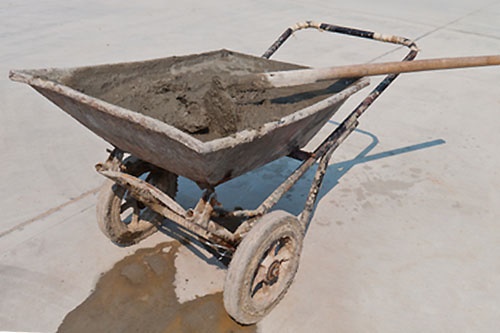
purchase of cement, sand and aggregate, self-preparation of the mixture in a wheelbarrow or concrete mixer and combining it with water (this is the most economical and at the same time risky variant, if you do not have technical knowledge how to make concrete),
- order of concrete from the concrete plant,
- purchase of ready-made, specialized quick-setting mixtures for joining with water directly in the ground.

Dry concrete – how long does it dry?
There is no single, simple answer to the question: how much dry concrete dries, because the rate of bonding depends on many different factors, such as:
-
ambient temperature (the colder, the slower the concrete binds, and in hot weather the water evaporates quickly, which may cause its dryness),
-
Humidity
-
composition and type of mixture, proportions used,
-
thickness of the laid concrete layer,
-
weight of anchored elements.
Standard lean concrete, intended for screeds inside and outside, takes about 4 weeks to achieve the desired parameters (structure and hardness) at a temperature of 20 ° C. Dry concrete, used for embedding fence posts, begins to bind within 30-60 minutes (depending on the composition of the mixture). 7-14 days is the minimum time interval you should keep between concreting and other scopes of work, for example – stretching the fence mesh.
How much time does dry concrete bind: the basic rules of concreting in outdoor conditions
Do you want to carry out construction works efficiently and you want the concrete to bind quickly? If you do not want to waste the material and your time, then remember a few basic rules of the art of construction, which you should necessarily follow:
-
avoid concreting on cold days when the air temperature drops below 5°C,
-
materials intended for the production of concrete cannot be cooled – it is best to store them at room temperature,
-
always pay attention to the quality and expiration date of cement,
-
clean the formwork from the snow and remove ice lumps, if they appeared,
-
in winter conditions, use admixtures or binding accelerators.
Winter is not a good time for concreting in outdoor conditions, because the ground often freezes, there is also intense rain and snowfall. Unfavorable factors cause that winter screeds dry two or even three times longer than concrete poured in summer or early autumn. Therefore, plan external work in the warm half of the year, from May to October, to avoid technical problems and costly corrections.
Why has dry concrete not tied or tied up for too long?
During the implementation of various projects, for example: fixing fence posts or building a fence foundation, it happens that the mortar does not bind. Have you prepared dry concrete, combined it with water, made a screed and observed that after a few days its structure remains too loose or crumbling?
The causes of too long bonding rate or loss of resistance to abrasion or pressure may include:
-
use of too much or small amount of water (proportions inadequate to the specificity and humidity of the substrate),
-
lack of coarse aggregate in the composition of the mixture,
-
low-quality cement,
-
obsolete or improperly stored cement,
-
use of dirty water,
-
concreting at temperatures below 0°C or higher than 23°C.
Under adverse conditions (frost, precipitation, shad, frost, icing of the ground), the probability of inhibition of the concrete bonding reaction increases. So if you don't have experience in concreting, talk to a technical advisor from your local concrete plant to learn more about it and avoid mistakes at the construction stage.