
 798 535 535
 Sign in


Co ile metrów rozstawiać słupek do siatki leśnej?
Posted by kaczmarski arkonsoft wrz 6, 2021 all
What how many meters to set the post to the forest net?
A fence in the form of a forest net is commonly used both as a temporary fence on the construction site and as a protection of a recreational or agricultural plot against wild animals or potential thieves. How many meters to place the posts for the forest mesh and what to remember during assembly? We suggest.
What is the significance of the spacing of posts for the forest mesh?
Many people who for the first time are faced with the need to independently assemble a fence from a forest mesh are wondering how to plan the layout of posts and how many meters to make holes. In contrast to system panels, which usually have a standard length of 2.5 m, the forest mesh gives greater possibilities in terms of dimensioning the distance between subsequent poles.
The wider the spacing of posts for the forest mesh, the less material is needed (that is, wooden posts and mounting accessories). Each time at the stage of planning the construction of a temporary fence and making measurements, the specificity of the terrain should be taken into account – on uneven and unstable ground, the posts must be placed densely to prevent them from falling or damaging the mesh.
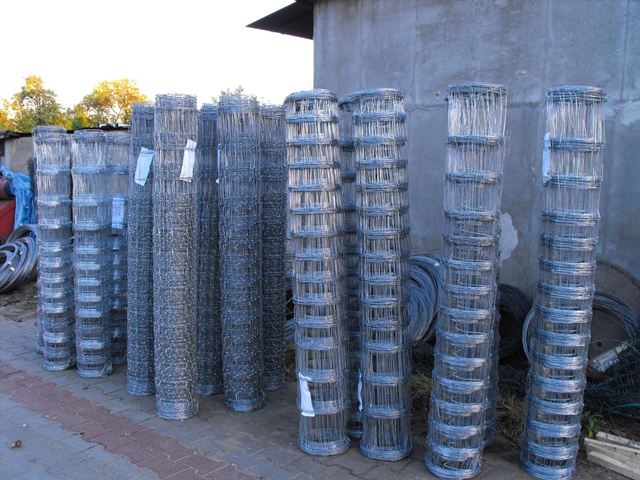
What how much to give a post to the forest net?
Forest net manufacturers and fencing industry specialists advise to keep a distance of 2.5 m or 3 m between the fence posts of the forest mesh. On stable ground, devoid of large irregularities and for fences erected for a short period of 3 m, they are successfully enough to ensure year-round protection of a plot or a busy road.
A distance of 2.5 m between consecutive poles is used when the fence may be exposed to animal attacks, strong winds or curvature under the influence of a landslide. It is also a good solution in a situation where, after dimensioning the plot, it turns out that maintaining a distance of 2.5 m will allow you to set the posts at equal intervals.
Temporary fence – what how much post?
Temporary fences are erected to secure the construction site, expressways, farmland, animal enclosure or forest nursery. The aesthetics of such a fence is of secondary importance, which is why wooden posts can be set every 3 m – this is the optimal distance, commonly used throughout Poland.
In temporary construction fences, it is worth analyzing the issue of setting the initial posts and the target width of the entrance gate or wicket If heavy equipment will enter the plot, a minimum of 3-4 m of light in the gate should be maintained so that large-size vehicles can move freely without the risk of damaging the fence.
Wooden posts ideal for mounting forest mesh
In order to correctly and evenly arrange the fence posts to the forest mesh, it is best to choose pine stakes, of similar diameter. The new, selected posts are available, among others, from mesh manufacturers such as STAL, in which you can buy fence stamps with a diameter (fi) from 6 cm to 10 cm and a height of 2.7 m to 3.1 m.
Standardized parameters of the height and diameter of the stakes facilitate quick and aesthetic installation of the mesh, and when a temporary fence is no longer needed, wooden supports will successfully serve, for example, as fuel. During the investment, they will also serve as high-quality construction stamps or braces, i.e. side supports of corner or middle posts.

Setting fence posts – what else is worth remembering?
Wooden posts, supporting the structure of the fence made of forest mesh, should be spaced every 2.5 m or 3 m, and the depth of excavations is a minimum of 50 cm. If the area is wet and the ground is clay, the underground part of the post should be additionally protected with a waterproof impregnation to protect the material from rotting.
When preparing holes for posts, it is also necessary to take into account the risk of periodic freezing of the ground in the autumn and winter months. For fences, which are to be used for several years, it is best to make deeper excavations, for 70 cm or 80 cm, to effectively protect the fence against tilting.