
 798 535 535
 Sign in


ŻYWOPŁOT JAKO UZUPEŁNIENIE OGRODZEŃ SIATKOWYCH I PANELOWYCH
Posted by Mateusz Kołodziejczyk cze 14, 2019 all , Fencing inspirations
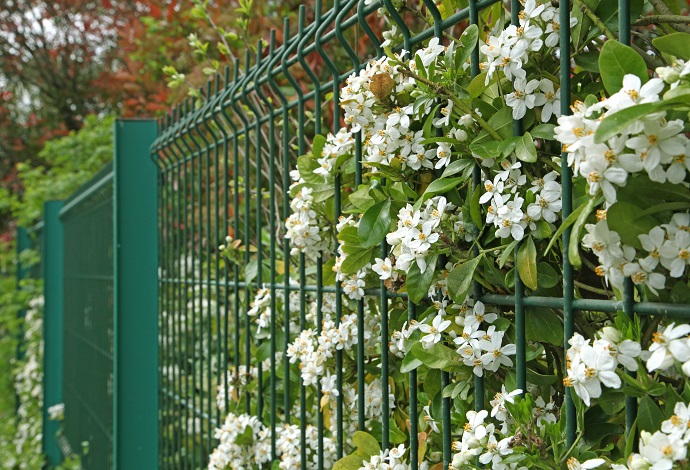
Hedge is an ideal idea for people who value privacy and want to protect themselves from the curious eye of neighbors. It is an excellent complement to mesh and panel fences. The "green wall" is not only a way to avoid the nosy glances of passers-by, but also a method for protecting against noise and pollution. The vegetation planted along the fence line also increases the aesthetic value of our fence and the whole garden, giving a sense of security and comfort.
One of the most important factors in the creation of this element is the choice of plants. Before buying, we need to think about what type of plant will be most suitable for us. A huge selection of different species of trees and shrubs give us unlimited opportunities in creating your space.
Among the species most popular for hedges are both deciduous and coniferous plants. Below we present a list of the most popular species.
1. BUKSZPAN – deciduous shrub evergreen. Ideal for low molded hedges. It is a plant that creates a dense cut. Unfortunately, its growth time is quite long. Growth occurs in games of 10 cm per year. Correctly it should be undercut twice during the season (in early spring and mid-summer). Keep in mind that the canoe does not like too wet substrate. Prices for small planted plants range from 1.5 – 4 pln, a shaped sphere with a height of 20 cm can cost about 30 zł.
2. FORSYCJA – a medium-sized flowering plant at the beginning of spring. It blooms before the development of leaves, showering with many yellow flowers. It grows best on sunny and damp substrates. However, the place for forcing should be sheltered from strong winds. The plant is characterized by high frost resistance. Branches should be cut in early spring immediately after overflow. Seedling forsycji is a cost of about 4 zł, a large shrub is an expense in games 40 zł.
3. LIFEPIECE – a popular tuja, the most popular coniferous plant for the creation of hedges of different heights. There are different types of conifers on the market – the most popular are emerald and brabant. To form a tight hedge, it is best to trim them 3 times a season – in the spring , in summer and at the end of August. I like well-sunlit areas. They are also not disturbed by sandy substrates. Tuja emerald with a height of about 100 cm is a cost of about 10-15 zł.
4. CIS – ideal for creating hedges in shaded areas. It is a plant that grows very slowly ( 3-4 m for 20 years). It tolerates clipping very well, and their care is not a difficult task. We should plan the pruning in early spring, then in the summer season it can be repeated. The spacing of shrubs during planting is selected depending on the variety. Planting can be done at any time of the year except winter. It should be remembered that yive is a poisonous plant. 20 cm yistling seedling is a cost of about 2 PLN – 5 PLN. If we want to invest in larger shrubs about 80-100 cm we

5. BERBERYS – it is a thorny shrub with characteristic fine leaves. Which in the autumn season turn red and orange. It is a non-demanding plant. It is characterized by resistance to drought and frost. I also find myself very well in urban conditions. To create a molded hedge, it is recommended to cut twice during the season- in February and June. A single seedling costs from 2 to 6 zł, larger shrubs cost in
7. LIGUSTR – a common shrub very often seen along fences in cities. It is a fast-growing plant that does not require special conditions for growth. The best to trim it in May and August. It is partly evergreen. In case of heavy frosts,
