Bezpieczeństwo najmłodszych to priorytet. Dowiedz się, dlaczego panel 1m montowany „do góry nogami” to najlepsze...
Granite Fence Posts: Pros, Cons, Uses and Types
Granite Posts: Pros, Cons, Uses, Types
Granite fence posts are a noble, timeless material that has been used for hundreds of years in various projects, inside and outside buildings. Today granite is very widely used on private and commercial properties and in public buildings. In our article you will learn what granite is, what the pros and cons of granite posts are, what this raw material can be used for and what types exist.
What Is Granite and What Are Its Properties?
In Latin the word granum means grain. The name began to be used several thousand years ago for a hard plutonic igneous rock made up of various multicoloured minerals: quartz, feldspars, plagioclase minerals and silicates. The rock stands out for its exceptional resistance to mechanical damage, scratches and cracks. Granite lasts for many years, effectively withstanding high and low temperatures, moisture and UV rays.
On the 10-point Mohs hardness scale granite ranks 7th, so it is among the hardest minerals, alongside topaz, corundum and diamond. Granites come in many different colours, from greys to beiges, shades of rust, green and violet. They can be polished smooth or left with a rough surface texture. They work equally well inside and outside buildings.
Granite Posts: Uses
Thanks to its variety and strength, granite is very widely used in many industries: fencing, construction, road building, gardening and stonemasonry. Granite is used to make paving setts, gravestones, parking bollards, windowsills, floors and stairs. The material is also used to produce various home decorations, planters, lighting columns, fountains, and aquarium and floristry accessories.
Granite is used to make ready-made, prestigious gate posts for entrance gates, as well as entire walls built from split stone. Fine granite aggregate is excellent for building modern gabion fences, and granite palisades work well as retaining walls on lawns and flower beds. Granite is also a great material for finishing brick or stone fence posts, as granite caps are an alternative to cheap sheet metal or concrete caps.
Granite Posts: Types of Finishing
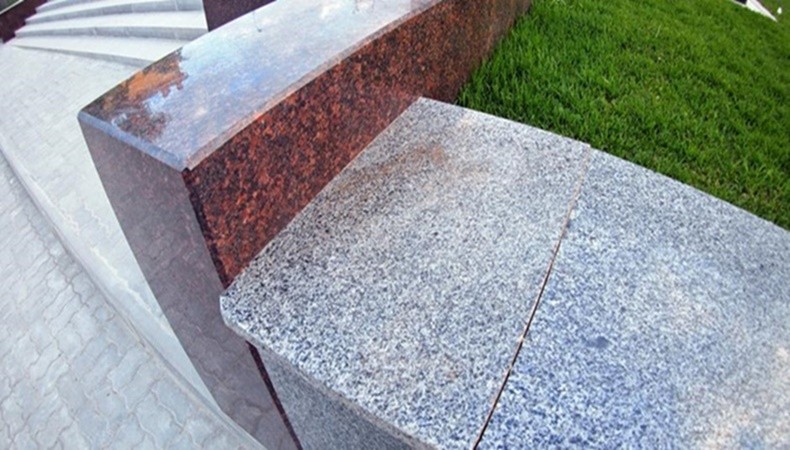
There are 2 basic techniques for working granite. You can choose granite posts in the raw version, either split or sawn. Split granite has a characteristic rough structure that gives the posts a distinctive, natural look. Sawn stone is smoother, has a vivid colour and resembles polished surfaces.
Granite posts can also undergo many other treatments that give the stone specific properties. What treatments are these? They may include:
-
flaming and impregnating - heat treatment and burning of the granite at a very high temperature, followed by impregnation, which strengthens the structure of the mineral,
-
sandblasted - this treatment makes the granite surface rough,
-
polished - the granite surface is then perfectly smooth and pleasant to the touch,
-
ground, brushed - the granite then has a slightly rough texture.
Granite Fence Posts: Pros and Cons
What are the advantages of a granite fence post? Above all it is an exceptionally durable material that looks elegant for many years, does not deteriorate or crack and copes very well with changing weather conditions. Unlike metal or concrete, granite is not damaged by moisture: it is a non-absorbent material, resistant to corrosion and cracking. You also have a rich colour palette of granites to choose from, so you can easily find a material to match your concept.
The main drawback of granite posts and granite aggregates is the high price of the material. Granite is a much more expensive building material than concrete and steel, so only a few investors can afford it. Another downside of granite posts is their heavy weight, which affects both the price and the difficulty of installation. Building a massive granite fence also requires appropriate knowledge and experience, so you cannot do without the support of a qualified installer.
Granite Post: Material Price
The price of granite fences and posts depends on the size of the order, the stone finishing method and the margin applied by manufacturers. The cheapest granite posts measuring 20 cm x 20 cm and 160 cm high, available in raw, split form, cost around 200-300 PLN each. Low posts intended for a parking or garden palisade currently cost around 100-150 PLN.
The most expensive granite posts are those with cut-outs, shaped to a design, flamed, tall (200-220 cm), in sophisticated colours. Manufacturers usually quote such materials individually and also add the cost of transport, which for heavy granite posts ranges from several hundred to several thousand zlotys.